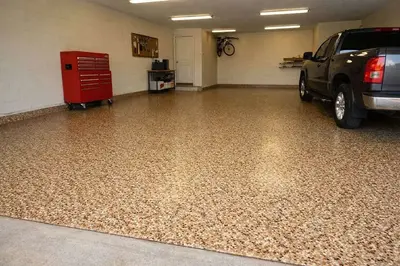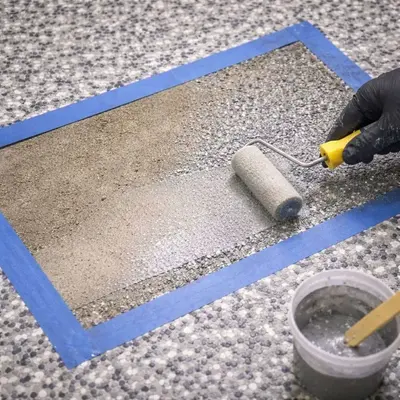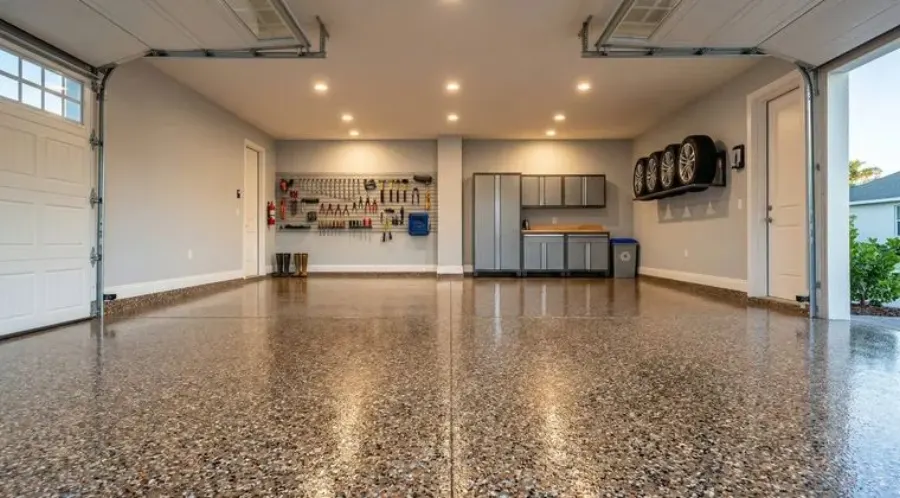
A coated floor asks less of you than almost any other floor in the house: nothing to wax, buff or reseal. What changes things in Greater Cincinnati is winter. From late fall into March the roads are often wet with brine and de-icer, and the strip just inside the overhead door takes most of what your tires bring home. A few minutes a week in salt season keeps it looking like the rest of the floor.
Everyday Care: Sweep Often, Mop Gently
Grit is what wears a glossy finish down. Sand pressed in by shoes and tires leaves fine scratches no cleaner can take back out, so keep it moving out the door.
- Weekly: back the cars out and run a wide dust mop or soft push broom from the back wall toward the door.
- Every few weeks: sweep, then mop with warm water and a little mild, neutral floor cleaner on a microfiber flat mop. A soft nylon brush handles stuck spots.
Skip wax, polish and household sealers. The clear top coat already is the protective layer, and anything added over it turns slick and cloudy.
Floor already chipped, stained or dull?
We can tell you whether it needs a repair or a fresh top coat, and we quote it in person for free.
What to Keep Off an Epoxy Floor
When a coated floor looks tired early, the cleaning cupboard is often to blame.
- Vinegar, citrus cleaners and other acids. They take a little gloss every time.
- Steel wool, scouring pads and wire brushes. Their scratches are permanent.
- Heavy degreasers and solvents for routine cleaning. Keep one degreaser labeled safe for coated or sealed floors, for grease only.
- Puddles left for days. Standing slush dries to a film; squeegee it out.
- A pressure washer held close. A hose or a wide, gentle spray is fine; a tight jet can chip flakes or catch an edge.
Salt Season at the Garage Door
Winters here are real without being extreme. At CVG in Hebron, Kentucky, home of Cincinnati's official weather station, NOAA's normals show about 100 nights a year at or below freezing, and most of them thaw by afternoon.
The City of Cincinnati pre-treats with salt or brine before a storm and works the hills and bridges first. Across the river, a February 2021 KYTC bulletin listed 16,500 tons of salt and more than 26,000 gallons of brine stockpiled for Boone, Kenton and Campbell counties. Whether you drive home down I-75 through the Cut in the Hill or over the East Side hills, that slush rides in on your wheel wells.
On bare concrete that's a problem: the concrete industry's NRMCA tells homeowners to hose salt off garage slabs, because de-icers keep the surface wetter and speed up scaling. A coating keeps the slush on top of the floor, where a squeegee or hose can move it. It still has to be moved.
The Weekly Salt Routine
- Pick a day above freezing so the rinse water doesn't turn to ice.
- Wet down the door zone with warm water, mop it with your mild cleaner, and squeegee it out onto the driveway. Salt removed while it's still slush can't dry into a white haze.
- Sweep out the grit that arrives with the salt; the grit does the scratching.
- Skip vinegar for salt film, or you swap a salt problem for an acid one.
Mats and Ice Melt
Rubber containment mats under each car catch the melt before it spreads. For the driveway, NRMCA calls ordinary rock salt acceptable for concrete in moderate amounts and warns that magnesium-based products and ammonium sulfate or nitrate damage concrete surfaces.
Spills and Stains
A coated floor doesn't soak up spills like bare concrete, so most marks sit on the surface. Start gentle.
- Oil and grease: blot fresh oil with paper towels, then scrub lightly with a coating-safe degreaser and a nylon brush.
- Rust rings: a soft brush and warm water first; many rust removers are acidic, so pick one labeled for coated floors.
- Paint and glue: let drips dry, then lift them with a plastic scraper or an old gift card. Keep strippers and acetone off the clear coat.
- Tire marks: warm water, your usual cleaner and a non-scratch pad.
Want Us to Look at Your Floor?
We'll come out, measure the space and talk through colors and systems before we quote, free. We take calls Monday to Friday, 9 to 6.
Basement & Laundry-Room Floors
The Ohio side of the river is basement country. A basement floor sees far less grit than a garage; when it has a problem, the problem is usually water. After two storms in July 2026, the sewer agency MSD of Greater Cincinnati received more than 1,500 reports of possible sewer backups, the kind that send wastewater into basements through floor drains.
A coating won't keep water out of a basement or stop a backup. What it gives you is a seamless surface that can be squeegeed, washed and disinfected once the water is gone. If the water came up through a drain, wear gloves and finish with a disinfectant that is safe on coated floors, then run fans or a dehumidifier until the room is dry.
From Krystal & Til's Google review of their basement laundry room: "Nick was prompt and very responsive. Our epoxy floor in our basement laundry room was done in a reasonable amount of time and it’s beautiful! They even ground down imperfections and sealed cracks. We definitely recommend!!"
Protecting the Floor & Knowing When to Recoat
Pads under tool chests and shelf legs prevent most dents, and heavy things should roll on a soft-wheeled dolly, not drag.
The clear top coat is the sacrificial layer: it takes the traffic so the color, flake or metallic layer below stays intact (our guide to how an epoxy garage floor is built shows the full stack). In a Cincinnati-area coated garage, the door zone usually wears first: watch for the shine going flat in the wheel paths and cloudy spots by the door. How soon depends on the system, the traffic and the salt routine, so there's no honest one-size number. A fresh top coat over a sanded, cleaned surface usually brings the floor back, if the wear hasn't reached the color coat.
A Year of Floor Care in Greater Cincinnati
| Season | What to Do |
|---|---|
| Late fall | Clear leaves and grit. Put mats at both doors and under the tires. |
| Winter into March | Weekly door-zone rinse on a day above freezing. Sweep grit often and empty the tire mats. |
| Spring | Wash the whole floor to lift the season's salt film. Check the door zone for dull spots. |
| Summer | Sweep, mop, spot-clean. Summers here are humid, and humidity and slab temperature affect when a coating can go down, so plan any recoat with your installer. |
When to Call Us
- Peeling or lifting. The loose area has to be ground back and prepped again.
- Bubbles or blisters. Often moisture from below. Basement slabs can carry moisture, which is why we check the slab before we recommend a system.
- New or growing cracks. Cincinnati's hillsides sit on clay-rich shale, and some local soils swell and shrink. If a crack is still moving, we will tell you before we coat.
- Chips down to bare concrete. Patch and seal them before salt and water get in.
The quote is free: call (513) 434-8103, Monday to Friday, 9 to 6. What a fix involves is on our epoxy floor repair and recoat page. On why the door goes first, read why Cincinnati epoxy floors peel at the garage door, and for the weather behind it, how Cincinnati's climate affects epoxy durability.
Frequently Asked Questions
How do I get road salt off an epoxy garage floor?
Rinse it with warm water before it dries. Once a week in salt season, on a day above freezing, wet down the door zone, mop it with a mild cleaner and squeegee the water out.
Is vinegar safe to use on an epoxy floor?
No. Vinegar and citrus cleaners are acidic and dull the top coat a little every time. Use warm water and a mild, neutral cleaner instead.
How often should I clean an epoxy floor?
Sweep weekly and damp-mop every few weeks. From late fall into March, add a weekly rinse of the door zone, and wipe up oil as soon as you see it.
Will winter road salt ruin an epoxy floor?
Salt left to sit is what does the harm, so rinse it off through the season. A coating keeps the slush on top of the floor rather than in the concrete, so clearing it is quick, but dried salt and grit still dull the gloss.
When does an epoxy floor need a recoat?
When the top coat looks flat or thin, usually at the garage door first. Timing depends on the system, the traffic and the salt routine, and we can tell you what your floor needs.