Industrial Epoxy Flooring for Warehouses and Shops in Cincinnati
Epoxy Flooring Cincinnati coats concrete for flex warehouses, machine and fabrication shops, fleet and service bays, and storage rooms in Ohio and Northern Kentucky. We walk the building and quote it in person, and each slab gets ground and repaired before it is coated.
The Working Floors of a Freight and Factory Region
If you run a supplier shop, a flex warehouse along I-71, I-75 or I-275, a machine or fabrication shop, a fleet or service bay, or the storage and loading rooms behind a store or restaurant, your floor takes forklift and pallet-jack traffic, dropped parts, oil and coolant, and a winter’s worth of slush through the dock doors.
Buildings like yours are everywhere in this freight and factory region. Its best-known sites are the air cargo hubs at CVG in Boone County, Kentucky, GE Aerospace in Evendale and Ford’s transmission plant in Sharonville, and around them sit far more of the smaller shops and warehouses this page is written for.
That slush is real. The airport weather station averages about 100 nights a year at or below freezing, and most of them thaw by afternoon. Kentucky’s District 6 highway crews had 16,500 tons of salt stockpiled for Boone, Kenton and Campbell counties in a 2021 bulletin, and the City of Cincinnati treats its hills and bridges first. Trucks and forklifts carry the brine inside. De-icers soak into bare concrete and hasten surface scaling, while a sealed floor keeps the slush on its surface, ready to be squeegeed back out the door.
The slab itself decides a lot. If your floor has been patched, painted and re-patched over the years, that is normal, and it is what prep is for. Some local soils swell and shrink with the seasons, so we check cracks for movement, and if one is still moving we tell you before coating. A floor coating cannot hold shifting ground together.
Coating a showroom, taproom or office instead? See commercial epoxy flooring.
Local pages for five of our Ohio towns: Sharonville, Blue Ash, Fairfield, Mason and Loveland.
What the Coating Has to Handle on a Working Floor
Spills, traffic, grip, prep, winter and the ground underneath: six things that decide the system for a shop or warehouse.
Spills
Oil, Coolant and Cleaners Wipe Up
On bare concrete, fluids soak in and stain. A sealed epoxy surface holds most of them on top until someone cleans up. If your floor sees strong acids or solvents, name them when we visit so the system can be checked against them.
Traffic
Wheels, Pallets and Dropped Parts
Forklifts turn on the same spots and pallet jacks drag. A thicker 100% solids epoxy, or a polyaspartic or polyurea top coat, stands up to that better than a thin paint-grade coat. Tell us what drives on the floor.
Grip
Non-Slip Where It’s Wet or Oily
Mix a non-slip additive into the finish around wash areas, dock doors and machine stations, the places people actually slip.
Prep
Ground Smooth, Every Crack Filled
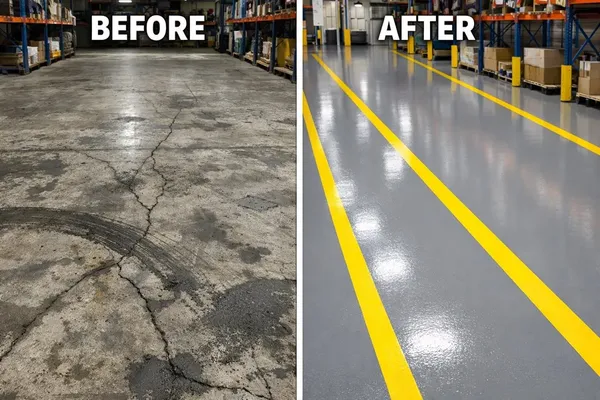
Before any coat, the floor is ground smooth and each crack, hole and divot is filled, so carts and wheels roll over an even surface instead of old patch lines.
Winter
Slush Stays on Top
Salty slush rides in on truck and forklift tires. On a sealed floor it can be squeegeed or hosed away instead of soaking into bare concrete by the door.
Ground
Moving Cracks Get Named, Not Hidden
Clay-rich shale soils around Cincinnati can shift. When a crack is still moving, we say so before coating rather than covering it, because no coating will stop it.
Why coatings fail at the door →From Walk-Through to Working Floor
Five steps. Timing depends on the floor area, the slab and the system; if part of the building has to stay open, raise it at the walk-through.
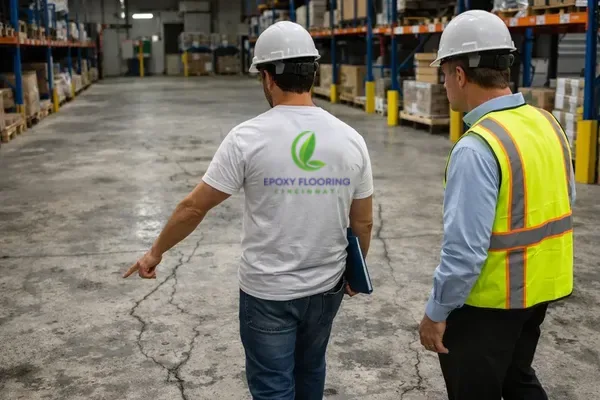
Walk the Building
FreeWe walk the floor with you: what drives on it, what spills on it, where water or slush collects, and which areas can close when. We measure and quote on site. Book a walk-through.
Grind the Floor
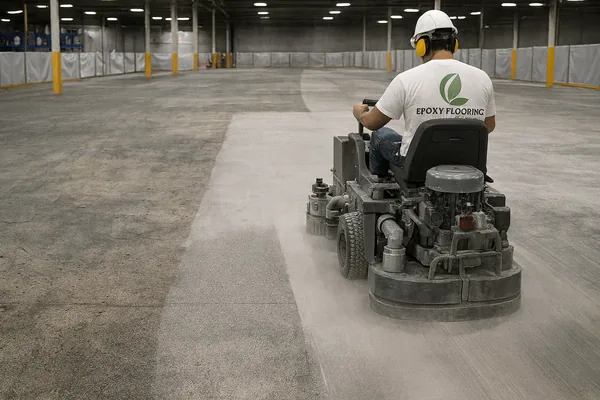
PrepGrinding opens up and smooths the concrete across the whole area, so the coating bonds to sound, even concrete instead of a worn top layer.
Fill Cracks, Check Moisture
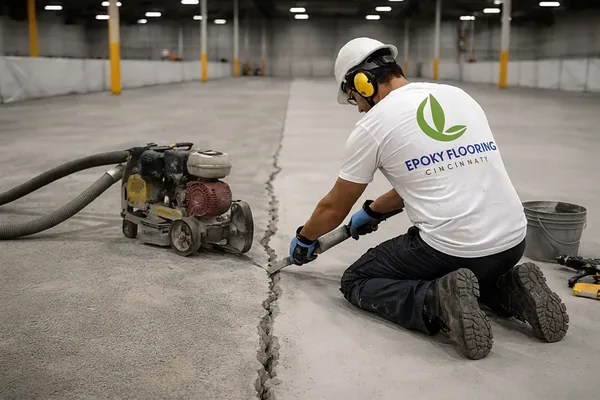
CheckThe crew opens up and fills cracks, holes and divots, and we check the slab for moisture before the system is settled. If the readings come back high, a moisture-mitigation primer goes down first; cost guides put that at about $1–$3 per sq ft extra, and moisture testing itself at about $50–$300.
Coat the Floor
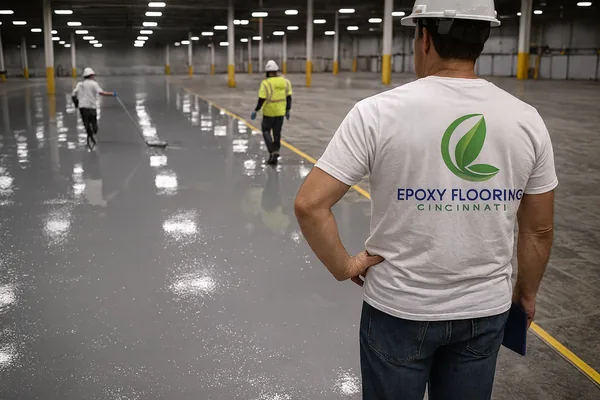
CoatsBase coat, any flake or color, then the top coat, with polyaspartic or polyurea where the traffic justifies it and non-slip additive in the zones that need grip. The work goes down in sections; the commercial floor guide covers planning around downtime.
Clean Up and Hand Back
DoneThe crew hauls the debris away and hands over before, during and after photos. Before forklifts go back on, ask us for the walk-on and drive-on times of your system.
Step 1 Is a Free Walk-Through
We take calls Monday to Friday, 9 AM to 6 PM. Send the form any time and we’ll call you back to arrange the walk-through.
Warehouse, Plant and Shop Floors
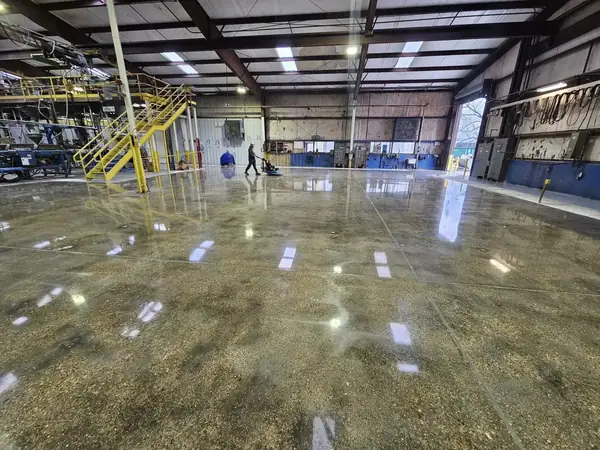
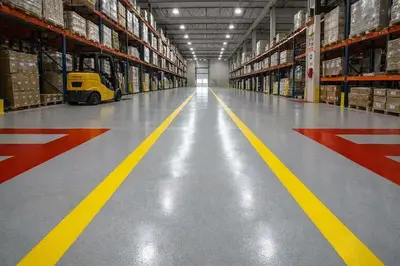
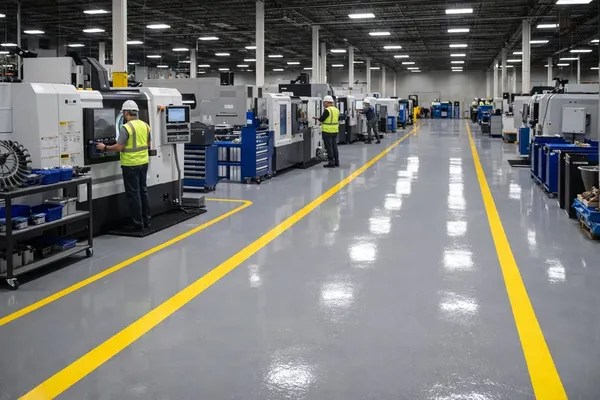
Industrial finishes from the gallery. On your job, we send before, during and after photos as the work moves along.
Prep, Planning and Speed, in Customers’ Words
Three Google reviews of our work. None of them is an industrial job, but they show how the crew preps, plans and schedules.
“Nick was prompt and very responsive. Our epoxy floor in our basement laundry room was done in a reasonable amount of time and it’s beautiful! They even ground down imperfections and sealed cracks. We definitely recommend!!”
“Nick and Bryant did a fantastic job on our garage floor. Nick sat down with me and laid out the plan with the colors to achieve the look that we wanted. He then described the process and timeline necessary to complete the work. He sent pics throughout the process to keep me informed. The metallic epoxy turned out great! Almost looks like a natural matte finished marbled look.”
“Nick did a fantastic job. He was very professional and able to get us in fast and took care of business. The floor is absolutely beautiful. We couldn't be happier.”
Industrial Epoxy Flooring FAQs — Cincinnati
What plant, shop and warehouse managers ask before a walk-through.
Working floors in flex warehouses, machine and fabrication shops, fleet and service bays, and storage and loading rooms. The systems are flake, solid-color and 100% solids epoxy, with polyaspartic or polyurea top coats and a non-slip additive available. Tell us what the floor carries and we will say what fits.
That depends on the load, the tires and the system. Thicker 100% solids epoxy and polyaspartic or polyurea top coats handle wheels and abrasion better than thin coatings, so describe your forklifts and pallet jacks at the walk-through and ask for the drive-on time of the system we recommend.
It can, near the doors. Trucks and forklifts drag in salty slush, and road de-icers make bare concrete scale faster. A coated floor keeps the slush on top so it can be squeegeed or hosed off, and a slab that is already scaling gets ground and repaired before it is coated.
Published figures run from about $3 to $12 or more per sq ft, depending on the system. One Southeast contractor’s 2026 list puts standard two-coat epoxy at about $3–$5, high-build 100% solids at $5–$8 and polyaspartic or polyurea at $5–$12, with a 10,000 sq ft warehouse in high-build epoxy at roughly $50,000–$80,000. HomeAdvisor’s national guide says commercial 100% solids systems can run $12 or more. None of these are Cincinnati quotes; we price your floor after seeing the slab.
It depends on the layout, so raise it at the walk-through. We can tell you whether the floor can be split into areas, and how long each area stays out of service depends on the system, so get the walk-on and drive-on times before you set the schedule.
See Your Shop Floor in Floor Studio First
Choose a finish and color, see it on screen, and have it ready when we walk the building.
Open Floor Studio →